$NAORIS Token is now LIVE & Trading
Buy Tokens

QUANTUM-PROOFCYBERSECURITY FOR WEB3

Naoris Protocol is the first Sub-Zero Layer 1 blockchain that acts both as a security layer for the entire decentralized stack, and as a sovereign L1 for building apps, devices, and digital trust. Powered by dPoSec™ consensus, Swarm AI, and a DePIN-secure, quantum-proof architecture.

Contact Us

Resilient by Design. Quantum- Safe.Instantly Deployable.

Award-Winning Tech

Naoris Protocol has won multiple technology incubator awards while collaborating with academia and industry across the globe

Why Naoris?
Why Naoris?

Why Naoris?

  • Sub-Zero Layer 1

    Sub-Zero Layer 1

    Not just another L1, Naoris operates below smart contracts and bridges, embedding real-time trust across nodes, devices, and protocols.

  • dPoSec™ (Decentralized Proof of Security)

    dPoSec™ (Decentralized Proof of Security)

    A novel consensus that rewards anomaly detection and real-time device validation, transforming every Device into a live security oracle.

  • Post-Quantum Native Chain (Dilithium-5)

    Post-Quantum Native Chain (Dilithium-5)

    Quantum-safe by design. Every TX is secured with NIST-approved Dilithium-5 encryption, future-proofing DeFi, DePIN, and beyond.

  • Swarm AI Mesh

    Swarm AI Mesh

    Instead of relying on static rules or single AI models, Naoris uses a swarm of lightweight AIs to detect, respond, and evolve in real time across the mesh.

Incredible Network Growth

First In-Production Post-Quantum Blockchain

Statistics from Testnet: Launched Jan 31st 2025

Post-Quantum Transactions

105M+

Post-Quantum Transactions

Naoris Wallets

3.3M+

Naoris Wallets

Security Nodes

1M+

Security Nodes

Threats Mitigated

600M+

Threats Mitigated

Endorsed by

Visionary Tech and Business Luminaries

David Holtzman

David Holtzman

Former CTO & Chief Scientist at IBM, designer of DNS System & former Cybersecurity advisor to White House under three Presidential campaigns.

Ahmed Réda Chami

Ahmed Réda Chami

Ambassador for Morocco to the EU. Former CEO Microsoft North Africa & Microsoft President of South East Asia, & Former Minister for New Technologies for Morocco

Mick Mulvaney

Mick Mulvaney

Former White House Chief of Staff, also served in the U.S. House of Representatives & director of the Office of Management and Budget (OMB).

Inge Kampenes

Inge Kampenes

Major General (ret.) and former fighter pilot and Chief of Norwegian Armed Forces Cyber Defence, with deep expertise in defence and military strategy

As IoT expands, vulnerabilities increase exponentially. Decentralized quantum resistance is crucial to safeguard secrets and computing for the future.

David Holtzman, Naoris Protocol Chief Strategy Officer

To outmanoeuvre cyber-criminals and nation-state threats, we need to play a different game, with Naoris Protocol, there are no single points of failure.

Kjell Grandhagen, former Chairman of NATO Intelligence Committee.

Advisors and the team

Powered by Top Web3 Investors

Tim Draper
Draper Associates

Tim Draper

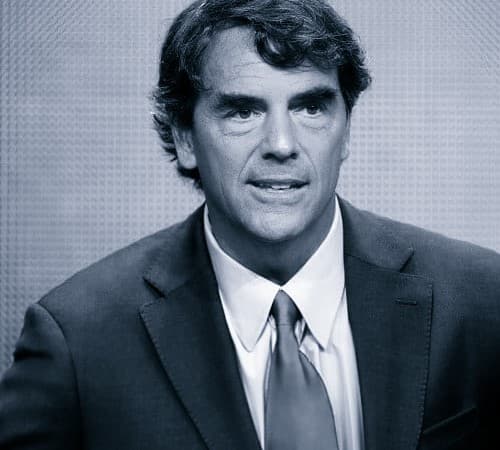
Naoris Protocol is creating a unique distributed cybersecurity solution with an enormous market opportunity, and we at Draper Associates are thrilled to be part of their journey.

Tim Draper, Founding Partner, Draper Associates

Duck DAO

Veteran crypto investment syndicate, widely recognized in the blockchain space.

GDA International

Large blockchain-focused advisory & capital markets firm with global presence.

The most recognized names in Web3 innovation stand with Naoris to build a decentralized, quantum-secure future.

Key Investors

Trusted by Web 3 Leaders

Michael Terpin

Michael Terpin

Founder & CEO of Transform Ventures, early blockchain investor/advisor to over 200 crypto projects. Author of Bitcoin Supercycle.

Rain Huan

Rain Huan

Founder of MASON LABS / GhostDrive. Web3 researcher & investor, building decentralized privacy tools.

Brock Pierce

Brock Pierce

Blockchain pioneer and investor. Co-founder of Tether, Block.one, and Blockchain Capital, driving global innovation in digital assets and decentralized finance.

Sarah De Lima

Sarah De Lima

Web3 strategist and gaming veteran. Building next-gen Intelligent Tech in media and digital innovation.

James Diorio

James Diorio

CEO of Tradecraft Capital, crypto asset manager, and award-winning author. 30+ years in tech and blockchain investment.

Web3
Use Cases

Web3 security must be decentralized, adaptive, and quantum-resistant. Naoris use cases illustrate how blockchain-native trust, post-quantum cryptography, and AI-powered intelligence converge to protect decentralized networks, nodes, and applications in real-world conditions.

Validator and Node Security

Validator and Node Security

For L1s, L2s, rollups, app chains and DA layers.
Protects validators, sequencers and prover machines from compromise.

CEX Infrastructure Security

CEX Infrastructure Security

For centralized exchanges and custody providers.
Secures signing servers, withdrawal pipelines, hot wallet infrastructure and operator devices.

Wallet and Key Security

Wallet and Key Security

For browser wallets, mobile wallets, hardware wallets, MPC frameworks and signing systems.
Ensures transactions originate from uncompromised devices and PQ-secure key paths.

Oracle and Off-Chain Compute Trust

Oracle and Off-Chain Compute Trust

For oracle networks, price feeds, data providers and ZK prover systems.
Ensures proofs and data come from trusted, verified machines.

Quantum-Safe Infrastructure (PQC Upgrade Layer)

Quantum-Safe Infrastructure (PQC Upgrade Layer)

For blockchains, enterprises and signing frameworks.
Provides Dilithium 5 PQ signatures and quantum-resistant transaction wrapping without forks.

DeFi and Smart Contract Protection

DeFi and Smart Contract Protection

For DEXs, lending protocols, perps and dApps.
Prevents runtime exploits, malicious transactions and flash-loan behaviour.

DEX Infrastructure Security

DEX Infrastructure Security

For decentralized trading platforms.
Protects matching engines, relayers, routers and MEV or bot-origin transactions.

Bridge and Cross-Chain Integrity

Bridge and Cross-Chain Integrity

For bridging protocols, messaging systems and interoperability layers.
Validates assets, validators and smart contracts before cross-chain execution.

DePIN and Physical Infrastructure Trust

DePIN and Physical Infrastructure Trust

For wireless networks, storage, compute, IoT, vehicles and robotics.
Authenticates real devices, detects fake hardware, enforces GPS and firmware trust and slashes rogue devices.

Compliance and Audit Assurance

Compliance and Audit Assurance

For exchanges, institutions and enterprises.
Delivers real-time Proof of Health, audit trails, trust logs and infrastructure integrity evidence.

Mainnet Product

Solutions

Validator Shield

Validator Shield

A real-time integrity validation system that continuously verifies validators, sequencers, and prover machines, preventing key theft, collusion, and compromised infrastructure.

Smart Contract Firewall

Smart Contract Firewall

A live behavioural protection layer for smart contracts that analyses execution patterns and device trust signals to stop malicious transactions and exploits before execution.

DePIN Device Verification

DePIN Device Verification

A hardware attestation system that validates BIOS, firmware, GPS, and runtime integrity to ensure DePIN devices are authentic and uncompromised.

Quantum-Proof Everything

Quantum-Proof Everything

A Quantum-Forward signing framework that secures blockchain transactions today while providing the architectural bridge to post-quantum cryptographic standards.

Cross-Chain Trust Relay

Cross-Chain Trust Relay

A trust-propagation layer that exports Proof of Health, trust scores, and PQ metadata to secure cross-chain communication and asset transfers.

Swarm AI

Swarm AI

A decentralised AI engine that monitors behavioural patterns across devices, validators, and smart contracts to detect anomalies, coordinated threats, and irregular behaviour.

dPoSec Consensus

dPoSec Consensus

A consensus mechanism where only devices with verified integrity and sufficient trust score can participate in validation.

Sub Zero Layer

Sub Zero Layer

A PQC-native Layer 1 blockchain anchoring all Proof of Health data, trust events, and AI-detected anomalies with quantum-secure cryptography.

learn more

At the Core of Web3: The Sub-Zero Security Layer

Naoris Protocol ensures that trust, verification, and resilience are built in from the lowest possible level, across Web3, DePIN, and beyond.

← Scroll horizontally to view full table →
Layer
Description
Purpose
Layer 3
Application layer of smart contracts & DApps (decentralized applications)
Enhance interoperability and user engagement/adoption
Layer 2
Protocols built on Layer 1 enhancing scalability & speed transactions off chain.
Improve transaction speeds and scale, reducing costs, increasing efficiency
Layer 1
Consensus protocol, data structure, network rules, security, tokenomics
Operate on primary rules & core blockchain components with native tokens
Layer 0
Underlying infrastructure & protocols that underpin blockchain networks.
Provide connectivity, data transfer, miners enhancing capabilities of Layer 1s
Naoris Protocol - Sub Zero Layer - Securing the Entire Blockchain Stack

Naoris: Sub-Zero Infrastructure and a Full Layer 1

Built to Secure All Layers

Built to Secure All Layers

Naoris is designed as a Sub-Zero Layer, an infrastructure layer beneath traditional L1s and L2s, securing trust across any network, device, or application. It acts as the trust mesh for the entire decentralized internet.

Build On It, or Secure What You Build

Build On It, or Secure What You Build

Whether you're launching decentralized apps, connecting IoT devices, or securing multi-chain systems, Naoris gives you both the base layer and the battlefield shield.

  • Build directly on Naoris
  • Or integrate it to secure existing L1s, L2s, and dApps
But It's Also a Layer 1

But It's Also a Layer 1

Naoris isn't just a security layer, it's also a sovereign blockchain.With its own consensus mechanism, validator economy, and smart contract layer, it functions as a fully capable Layer 1 chain.

$NAORIS: The On Chain Proof of Trust Token

  • The native utility token of Naoris Protocol, powering the Decentralized Proof-of-Security (dPoSec) consensus mesh.

  • Each bonded token represents participation in a trust economy: devices validate each other in real time, with outcomes anchored on-chain.

  • Validators (TrustNodes) earn $NAORIS rewards by performing millisecond integrity attestations.

  • Validations are tracked and shared immutably across networks, promoting ecosystem-wide transparency.

  • Security: Bond $NAORIS into nodes, securing infrastructure while earning yield.

  • Validation: Tokens flow as rewards from nodes that confirm peers' safe behavior.

  • Governance: Influence future protocol upgrades tied to AI, PQ cryptography, and economic parameters.

  • Turns every device into a security validator, scaling trust through decentralized validation instead of centralized audits.

  • Enables instant, on-chain proof of compliance and device integrity.

  • Promotes active participation via stakeholders, white-hats, and infrastructure providers

Buy Tokens

The Hidden Flaw in Web3 Security

99% of digital infrastructure, even in Web3, still depends on fragile, centralized systems.

Decentralization in Name Only

Decentralization in Name Only

dApps, L1s, and bridges often rely on centralized APIs, servers, or multisig setups.Most “Web3” stacks are still built on legacy Web2 infrastructure, lacking real-time trust guarantees.

Real-World Consequences

Real-World Consequences

Major breaches (Ronin, Wormhole, Harmony) stemmed from single point failures like stolen keys or validator compromises.

IoT Growth = Exponential Risk

IoT Growth = Exponential Risk

As DePINs (decentralized physical infrastructure networks) scale, billions of sensors, routers, drones, and endpoints join the Web3 mesh.These devices are cheap, unverified, and easily cloned or hijacked.

A single rogue endpoint can poison an entire DePIN's trust signal, draining token rewards or spoofing data integrity.

The Coming Quantum Catastrophe - Why Q Day Matters

Q-Day is the moment quantum computers can break today’s public-key cryptography, and it’s not theoretical.

The Timeline:

Timeline illustration
  • NIST, NSA, and NATO estimate 2 - 5 years until scalable quantum attacks.
  • But harvest-now-decrypt-later attacks have already begun, capturing encrypted data to break later.

Q.Day is approaching

What's at Risk:

Risk illustration
  • RSA (used in HTTPS, email, banking)
  • ECDSA / secp256k1 (used by Bitcoin, Ethereum, most L1s)
  • Digital signatures, multisigs, smart contract deployment proofs

Every encrypted message, transaction, or key signed today using RSA/ECDSA may be retroactively broken the moment Q-Day arrives.

What We've Already Proven, On-Chain & At Scale

1M+

1M+ Security Nodes onboarded into the dPoSec mesh, each continuously broadcasting cryptographic proofs of integrity

1.9M+

1.9M+ DePIN endpoints converted into Sentinel-mode TrustNodes, from routers and IoT boards to browser nodes and containers

Zero-day

Zero-day vulnerabilities detected by community stakers before traditional scanners, proving real-time Swarm AI + staking utility

99.9%

99.9% anomaly detection accuracy across live runtime states, not just simulated attack models

100k+

100K+ Post-Quantum Transactions executed across the Sub-Zero L1 since Jan 31, 2025, validating real-world throughput at up to 70,000 TPS, fully secured by Dilithium-5 signatures

Let's Work Together

Integrate our post-quantum solution to secure the future of your operations and assets at low cost

Contact Sales

Endorsed by

Latest Articles & News

Loading blogs...

Press

Forbes
Computer Weekly
Financial Times
Coindesk
Benzinga
Cointelegraph
IB Times
yahoo finance

FAQ

Naoris Protocol

Naoris is the first Sub-Zero Layer 1 blockchain designed for real-time, decentralized cybersecurity, using post-quantum cryptography, Swarm AI, and a novel dPoSec™ consensus to protect devices, smart contracts, and infrastructure from the ground up.

Naoris is a sovereign Layer 1 chain with smart contract capabilities, while also acting as a Sub-Zero trust layer beneath other L1s, L2s, and dApps. You can build directly on it, or plug it in to secure what you've already built.

It means Naoris operates below the stack, securing validators, devices, and code execution before it interacts with Layer 1s, bridges, or wallets.
It's not just decentralized infrastructure. It's decentralized trust.

Decentralized Proof of Security, a next-gen consensus where devices validate each other's integrity in milliseconds.
It replaces slow audits and blind trust with live, on-chain trust scores.

A decentralized, collaborative AI that learns from millions of nodes and runtime behaviors across the network.
Instead of using static detection rules, Swarm AI detects novel threats and triggers real-time defenses.

Every transaction hash uses NIST PQC approved algorithms and resistant to quantum attacks.
You don't need to migrate. You're already future-proof.

Yes. With a lightweight agent or SDK, you can turn:

  • A smart contract → into a self-monitoring node
  • A router or IoT sensor → into a TrustNode
  • A wallet → into a real-time compliance oracle

Any.
Naoris exports trust proofs to EVM, Cosmos, Move and more, making it ideal for multichain bridges, dApps, DePINs, and DeFi protocols.

  • Validator key theft (e.g., Ronin, Harmony)
  • Reentrancy & flash loan exploits
  • Fake or hijacked DePIN devices
  • Supply chain and firmware attacks
  • Pre-Q Day quantum threats
  • Cross-chain bridge manipulation
  • Built-in security & trust mesh
  • Post-quantum, sovereign Layer 1
  • Tokenized security economy with dPoSec rewards
  • Real-time Swarm AI protection
  • Seamless DePIN + cross-chain use case support
  • Future-proofed infrastructure